
Better care depends on supported teams
Last month, May reinforced a consistent message across our work with practices, PHNs and aged care providers.
Primary care and aged care teams are managing rising demand, increasing complexity and limited time. Many health professionals are working hard to provide the care people need, but the systems around them are not designed to make that possible.
So, is AI the answer?
Current AI tools can help improve documentation and reduce time spent on note-taking. As AI advances, there is also potential for it to support more proactive care by helping identify gaps in pathology results, clinical notes and missing actions across a person’s care journey.
This could be particularly useful for frequently missed issues such as uncoded Chronic Kidney Disease in GP software and persistent polypharmacy. These are “points of failure” that need to be addressed more consistently and more urgently.
AI may be part of the answer, but it is not the whole answer.
If current software prompts are often overridden by busy health professionals, AI will only be useful if the underlying systems, workflows and team responsibilities are also improved.
Better care outcomes depend on better systems and supported teams.
Responsibility for proactive care cannot rest solely with the GP, especially when many GPs work part-time across seven-day rosters and may not always see their regular patients when care gaps are most apparent.
Many parts of general practice can be better supported by the wider team.
Done well, this can improve patient value, reduce low-value care, increase access, improve workflow and support financial sustainability.
The 10 QI-PIP indicators are a useful example. While funding for this programme has been extended for another two years, many practices we work with are not consistently reviewing these clinical indicators. In many cases, the data is available, but remains hidden or opaque to many people within the practice.
Quality requires more than intention. It requires a clear baseline, an improvement plan and regular review.
In our Practice Leadership Program, co-facilitated by business management and strategy consultant Rod Buchecker, participants complete a predisposing activity called “Know Your Numbers”.
This helps practices review their population demographics, chronic disease burden, clinical indicators, care planning, nurse involvement and model of care.
We often find that practices with stronger quarterly care plan reviews and greater nurse involvement have better clinical outcome data. Involving nurses as part of the model of care can support better outcomes than GP care alone, but this requires leadership, clarity and shared purpose.
The Checklist Manifesto by Dr Atul Gawande
One of my favourite authors is Dr Atul Gawande, a US surgeon, writer and regular contributor to The New Yorker.
His book, The Checklist Manifesto: How to Get Things Right, was published in 2009 and remains influential today. It argues that in an era of extreme complexity, the simple checklist is one of the most effective tools for preventing failure, reducing variation and ensuring consistency in healthcare.
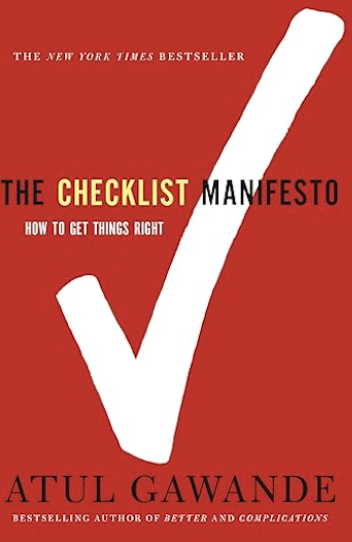
The Checklist Manifesto: How to Get Things Right by Dr Atul Gawande
Sustainable care relies on leadership, system design and investment in people.
Through our Practice Leadership Advantage Program, we help practices review their numbers, strengthen team roles and build practical systems for safer, more sustainable care.
Thank you for staying connected with Bollen Health.
- Chris, Jane and Rod